

icefairy's Treasure Chest
Custom Search
Showing posts with label Guest Post. Show all posts

World's Worst Time Machine Blog Tour: Guest Post and Giveaway

Welcome to the

World’s Worst Time Machine

Blog Tour & Giveaway!
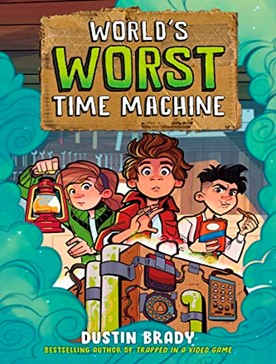
Guest Post by Dustin Brady

I am delighted to welcome Dustin Brady to talk about his latest book for kids, World’s Worst Time Machine!

About the Book: 

From best-selling author, Dustin Brady, comes a new illustrated novel series perfect for fans who love funny, unexpected adventures and wacky plot twists.

For kids, life can be boring, but Liam and Elsa know how to create their own fun — or so they think. After finding a $3 time machine at a garage sale, Liam uses the machine to summon Thomas Edison for help with his book report. It's not until the time machine sends a different Thomas Edison from the 1930s that chaos ensues.

World's Worst Time Machine is the newest series from best-selling children's book author of the Trapped in a Video Game series, Dustin Brady. Using his signature style, Brady's laugh-out-loud sense of humor and daring adventure will keep even the most reluctant reader wanting to turn the page.

Join Dustin’s “Insider Club” for a first look at

new releases and free goodies throughout the year!

Purchase Here.

About the Author:

Dustin Brady writes funny, action-packed books for kids. Although he regularly gets locked out of his own accounts for forgetting passwords, Dustin still remembers the Super Mario Bros. 3 Game Genie code for infinite lives. It’s SLXPLOVS. Dustin lives in Cleveland, Ohio, with his wife, kids, and a small dog named Nugget.

Website | Facebook

Guest Post By Dustin Brady:

MY DAY WITH THOMAS EDISON

I want to write books I would have loved reading as a kid, so I always begin my writing process by thinking back on things I used to daydream about. I was kind of a weird kid, so I don’t know how common my daydreams were, but I figure if I found them interesting, maybe there’s a nugget there that’ll connect with today’s kids.

Something I’d think about a lot was what I’d do if I could bring a historical figure to the present day for 24 hours. That’s a strange thing for a kid to dwell on, huh?

That question led to my latest book, World’s Worst Time Machine. In this book, the hero brings Thomas Edison to the present day. But since he’s using the World’s Worst Time Machine, it’s the wrong Thomas Edison. This Thomas Edison is a kid from 1933 who wants to be a gangster and would really prefer to be called “Tommy Twinkles.”

I didn’t get that far in my original daydream (but would have been delighted if I had!). Here are all things I imagined doing with the real Thomas Edison as a kid:

  1. Play Super Mario Bros. 3 on my Nintendo.
  2. After Thomas Edison’s mind had been sufficiently blown, break out the Nintendo’s light gun and play Duck Hunt.
  3. Give Mr. Edison an atomic warhead sour candy. Start him out with the lemon one for maximum effect.
  4. Demonstrate the final evolution of his phonograph: the Talkboy voice recorder from Home Alone 2.
  5. Go on a car ride. Let him drive in the empty parking lot of the closed Hills department store.
  6. Point to an airplane overhead. Explain that most people don’t really know how they fly.
  7. Go to Cedar Point (America’s Roller Coast). Take him on the Magnum XL-200 and make him hold his hands in the air down the first hill.
  8. Stay at Cedar Point until they kick everyone out of the park because that is the only way to do Cedar Point, even when you’re enjoying a once-in-a-lifetime visit from a deceased historical figure.
  9. Back at home, right before bed, break out the Christmas lights to show him just how far his light bulb had come.

As silly as that sounds, writing all that down gets me in the right mindset for my book. I find that my best ideas are the ones I would have thought of at 10 years old.

Guest Post: The 4 Best Personal Finance Apps For New Parents

Learn how you can keep track of your current spending habits and plan for your financial future using these helpful applications

If you are a new parent, then you’ve likely already worried about managing a family budget. While you may have kept a budget for yourself in the past, keeping the family finance in order is a brand new challenge. However, keeping track of your spending habits and plans for the future doesn’t have to be overwhelming.

These days, it is easier than ever to keep track of your finances using your smartphone. You can use different apps to track your spending, check your savings, pay your bills, and even manage your term life insurance policy. We’ll be getting to all of these features and more as we discuss the best personal finance applications for new parents. If you are a new parent interested in help managing your finances—you are not alone! Keep reading to find out how these apps make previously complicated financial tasks easier than ever before.

1. Fabric

Using Fabric, you can secure a term life insurance quote, manage your policy, and access several other useful planning tools.

Easily manage your insurance coverage with the Fabric app. Image courtesy of Investopedia.

If you are a new parent and you haven’t heard of Fabric before—this is an app you definitely want to check out. Fabric is one of the few finance applications that is specifically designed to meet the needs of young families. Using the Fabric app, you view different term life insurance quotes, manage your life insurance policy, access free will writing services, and help you manage your day to day finances. Fabric offers a variety of policies including no-medical-exam term life insurance quotes so you can get the coverage you need to protect your family. When you download the Fabric application, you’ll first be presented with a list of questions to help the application learn more about your family, your financial situation, and the services you require. After that, Fabric will create a personalized financial checklist that you can use to take care of the most pressing duties first. Once you have your checklist, you can get started working on your top priorities as organized by the Fabric app. As part of your financial checklist, the Fabric app also allows you to manage your savings accounts—like a college savings account for example.

New parents can also use the application to easily create a will at no cost to the user. Writing a will is especially important for new parents to plan for the future—no matter what happens. Using the Fabric app, parents can designate a guardian for their children, name beneficiaries for assets, and choose an executor for your will. This service is all available to all users completely for free.

Beyond setting goals and managing your will, new parents can also take advantage of the financial planning aspects of the Fabric app. It can be difficult to get a big-picture idea of your finances when you have several accounts and credit cards between yourself and your spouse. When you use the Fabric app, your family can easily link all accounts and credit cards so that you can view all of your finances in the same application.

Overall, the Fabric app offers term life insurance quotes and comprehensive life insurance services along with budgeting and savings tools that are perfect for new parents. This makes it one of our top choices for new parents who are looking for ways to view all of their finances in one place. Additionally, all information stored in the application is heavily encrypted at bank-level security, so you won’t have to worry about potential hackers.

Guest Post: 7 Ways to Cope With Intrusive Thoughts

Find out how you can curb intrusive thoughts with the help of online therapy options and other effective strategies.


For those who have struggled with their mental health, intrusive thoughts are not a new thing. It is often more difficult to control our thoughts and emotions than we let on. Because it can be difficult to control our thoughts, intrusive thoughts can sneak in and affect the way we feel about ourselves. If you’ve sought out this article as a way to help manage intrusive thoughts, then you’ve already made an important decision. Only once we recognize that we are having intrusive thoughts can we take steps to curb them.

If you are currently experiencing intrusive thoughts, then it is important to do everything you can to stop them. Not only are they uncomfortable—and oftentimes disturbing—they are disruptive to our everyday lives and can cause symptoms of mental health disorders to worsen. That’s why we are discussing 7 different ways that you can curb, cope, and distract yourself from intrusive thoughts. Today, we’ll be exploring everything from how to find a therapist to in the moment solutions for when negative thoughts pop up. Plus, we’re going to be discussing how online therapy options can help you get to the root of your intrusive thoughts. But first, we have to define what intrusive thoughts are and take a look at some of the causes. Let’s get started!

What is an Intrusive Thought?

Before we start exploring different online therapy options, we first need to take a closer look at what intrusive thoughts are and are not.


Many experience intrusive thoughts without knowing what they’re called.

When you hear the phrase “intrusive thought” you may assume that the phrase is self-explanatory—an intrusive thought is a thought that intrudes on your conscious mind. However, intrusive thoughts are more sinister than that. An intrusive thought by the psychological definition refers to thoughts that are unwanted, involuntary, and cause distress. These kinds of thoughts are characterized by their often violent, graphic, or disturbing nature. While not every intrusive thought is disturbing, they are always unwanted.

It is common for intrusive thoughts to be repetitive, out of control, and seemingly random as they pop into our minds. When these thoughts appear, they can exacerbate existing symptoms of mental health disorders, make it difficult to focus, and can lead to feelings of shame and guilt. It is also commonly reported that intrusive thoughts are vastly out of character for the person experiencing them. To get a better understanding of what exactly constitutes an intrusive thought, let’s take a look at some of the common themes reported by people who experience these kinds of thoughts:

  • Inflicting harm on others 
  • Harming yourself 
  • Graphic fantasies 
  • Family or friends dying 
  • Disasters 
  • Car crashes or plane crashes

These are just a few of the common themes that appear in intrusive thoughts, but really any thought that is unwanted and causes stress can be considered an intrusive thought. The important thing is that you are getting help if you are experiencing thoughts that involve the aforementioned themes. If you are, it is important to explore ways to get help like online therapy options or in-person care. But, before we get to the solutions, we should take a look at some of the most common causes of intrusive thoughts.

What Causes Intrusive Thoughts?

There are a whole host of mental health conditions that can cause intrusive thoughts.


Intrusive thoughts can be caused by several internal and external factors.

Most often, intrusive thoughts are brought on by an already existing mental health condition. If you are experiencing intrusive thoughts only, you should search for online therapy options or in-person care to try to get to the bottom of what is causing these thought patterns. For most people who experience intrusive thoughts, the thoughts are just one of the many symptoms associated with the following disorders:

These conditions produce a lot of negative side effects, with intrusive thoughts being one of them. If you have already been diagnosed with one of these disorders, then that is most likely the cause for your intrusive thought patterns. If you haven’t already been diagnosed, you may be suffering from one of the aforementioned disorders without realizing it. As we mentioned, either in-person or online therapy options can help you get a better understanding of where the intrusive thoughts are coming from.

Burning Magic Blog Tour: Guest Post by Joshua Khan


I have the pleasure of hosting today's tour stop for Joshua Khan's new book Burning Magic. Please enjoy a guest post from the author right after the synopsis of the book.


BURNING MAGIC is the third and final installment in the Shadow Magic trilogy. In this sizzling adventure, Lily the sorcerer queen and Thorn the giant-bat-whisperer journey to the Sultanate of Fire to help their friend K'leef in a no-holds-barred contest for the throne.

When Lily, aka the "witch queen" and bat-rider extraordinaire Thorn travel to Sultanate of Fire, things go terribly wrong. Instead of celebrating a reunion with their old friend K'leef, they are thrust into royal murder, an epic quest, and a deadly battle for the throne.

While investigating the murder, Lily learns shocking truths about her life that could destroy all she has achieved. Yet, among the ruins of her old life, she has the opportunity to become someone greater . . . and more terrifying.

Thorn and the magnificent bat, Hades, join the timid K'leef and the idiotic Gabriel Solar in a quest to find a phoenix. These fire birds are the key to saving the sultanate, but they nest within the Shardlands. The boys must defeat not only the monsters of that magical wilderness, but also rivals eager to claim the throne for themselves. Rivals that include a renegade from House Shadow.


Guest Post Topic: Please tell us a little bit about your writing process and what lead you to writing the Shadow Magic series. Did you have the ending for BURNING MAGIC in mind when you first started SHADOW MAGIC? Have the characters surprised you with where their journeys ended up leading you to write them? Please give us a small peak into your book with a set of your favorite quotes from the story!

I wanted to do the ‘anti-fantasy’ fantasy! It was that simple. So I looked at what the biggest clichés were within the genre, then did the opposite. So, in no particular order:

1. The quest. The fantasy genre is dominated by a band of heroes going on a journey. Nope. SHADOW MAGIC basically takes place in one building, Castle Gloom.

2. Dark sorcerers are the BIG BADS. Sauron, Voldemort, Loki, Hecate are prime examples of evil sorcerers. Nope. My heroine, Lily Shadow, is a necromancer descended from a long line of dark sorcerers and couldn’t be prouder of her blood line.

3. You have to have dragons. Nope. If the book was being set in a kingdom of darkness I wanted monsters that suit the setting. So… giant vampire bats. One in particular called Hades. He’s old, grouchy, stubborn and all together unpleasant but the most loyal ally you could ever have, if you earn his respect. Which is nigh-on impossible.

4. The world is neatly divided into Good and Evil. This goes back to Point 2. I wanted the world to be ever evolving. Good guys become villains, bad guys can end up heroes. Things change, for better and for worse. The hardest thing in the world is knowing the difference between good and evil, it’s trickier than you think. Thorn, my peasant boy hero in the books, knows the difference, and will do the right thing no matter what trouble it gets him into. If Lily is a bit more cunning, thinking things ahead, then Thorn is more headstrong, and honest.

5. The wizards are kindly advisors. This goes way back to Merlin. The wizard helps the hero, but stands to the side. Nope. Lily takes centre stage. This is a world created, and ruled, by magic. It is not discreet or hidden. It is in your face!

The SHADOW MAGIC trilogy grew out of those concepts. Sure, there will be books that have done one or the other already, but I wanted to embrace the opposites! One of the most thoughtful characters in the books is Tyburn, a ruthless executioner. But he serves Lily, and is training Thorn, so you see there is more to him that his fearfully exterior.

BURNING MAGIC is the big pay off. The whole series has been centered around Lily’s rebellion against the oldest law of the New Kingdoms, that women cannot practice magic. She trained herself in dark magic to protect her people, and BURNING MAGIC is about the consequences of coming out in the open. It goes into the very origins of magic. The Six Princes were the first sorcerers, and it was they who laid the law against women sorcerers. Why? What were they trying to hide? You find out in BURNING MAGIC!

Thorn’s character surprised me most of all. He doesn’t have an ounce of magic in him, yet he stands up against all dangers and opponents. Lily may be the witch queen, but Thorn is her equal. He doesn’t think you’re better because you’re born rich, or in a palace.

And it’s not just because of his archery, or skill with animals, it’s to do with his honesty. He sees things as they really are, and knows what’s the right thing to do. He doesn’t get lost in second guessing. The more I wrote about him, the more I realized that was a unique skill, a power in its own right. A true hero does what’s right, irrespective of the consequences or the dangers to themselves. That is Thorn. It made writing the story tricky at times. Thorn would do something that would get him in a lot of trouble, and the others work hard to get him out! The whole plot of BURNING MAGIC kicks off because Thorn does the right thing, and chaos ensues, as it inevitably does when Thorn’s involved.

QUOTES:

“The wedding was all set and moving along nicely until the king ate one of the heralds.”

“She thought she’d take the zombies on holiday?”

“My grandpa has special pants, too.”

“Take the boy and put him on the pyre!”

“At least the left us the bathtub.”

“Kill the witch!”

“Go to the Pit, and you will hear my name whispered by the dukes of hell!”

“My name is Lilith Hecate Shadow!”

Disclosure: I received a free copy of the book to facilitate my posting. Contents of this article were provided by the author.

Dental Care Tips for Children from CloSYS Experts

February is Children’s Dental Health Month. Dental care experts from CloSYS have kindly provided some tips to help parents keep their kids' mouth clean and healthy. Read on for "Tell, Show, and Do: How to Make the Most of Children’s Dental Health Month."

February is a great time to recognize the importance of oral health for children and effectively get your child interested in good oral hygiene. Parents can help children get a good start on a lifetime of healthy teeth and gums by modeling good behavior, developing good habits at an early age, and scheduling regular dental visits.

It can even start as early as in infancy by familiarizing your child with the feel of a soft infant toothbrush or wet wash cloth as you clean their gums after mealtimes. Give your child, even if they don’t have teeth, a soft bristle toothbrush so they can copy mom or dad. They will do it!

Another great way to teach young children and toddlers the proper techniques of good oral hygiene is to tell, show and do.

TELL: Explain how to brush and floss and how those actions keep teeth clean and healthy. Make sure you use age-appropriate language so your child will truly understand. Let them ask questions, and make sure to answer them.

SHOW: Let children watch when you brush and floss your own teeth. Again, let them ask questions and make sure to answer them. Answer them by showing them. Sometimes using a stuffed animal can help you demonstrate.

DO: Help children brush their teeth in the morning and before bed. Keep a regular routine so they know it’s expected. Brush for at least two minutes. Sometimes teaching them a song that takes about two minutes helps. It helps them brush for the whole time, as well as makes it fun! Continue to help your child brush their teeth until they’re 4 or 5 years old. After that, let them do it themselves, but supervise and monitor until they’re 7 or 8 years old.

Paw It Forward with Morris the Cat & Chance to Win Cool Prizes!

This is a guest post provided and sponsored by 9Lives.

Hey Ice Fairy's Treasure Chest readers! Morris the Cat, from 9Lives cat food, here. (You may have thought that a cat's only computer skills involve laying on the keyboard while others are trying to use it, but in fact, we are very tech savvy.)

For those of you who don't know me, I've starred in over fifty 9Lives cat food commercials, am an advo-cat for kitty rescue, and was even crowned one of Advertising's Greatest Icons by the Museum of Broadcast Communications. (But I must say, I took issue with this honor. I didn't know I was *advertising* **all those years... I just really love 9Lives!)

In case you couldn't guess, I'm purr-ty much an expert when it comes to eating, and that's the subject of my next venture. As you know, the holidays are 'prime eating time' and I want you to be able to chow down like a pro.

I also thought, with everyone in the holiday spirit, it's a great time to give back. Lucky for you, giving back is as easy as using your opposable thumbs. With those two bad boys – and the rest of your fingers – you can help feed a kitty in need. Watch this video to find out how. (Spoiler Alert: It's totally FREE!)

Live Well & Prospurr with Morris the Cat & Chance to Win $420 in Gift Cards!

This is a guest post provided and sponsored by 9Lives.


Morris the Cat is known throughout the world as the star of over fifty 9Lives cat food commercials from the 1970s up through today. He gained even greater notoriety when he became an advo-cat for kitty adoptions with his “Million Cat Rescue” initiative, and just this year, he took a trip to South by Southwest as a feline technology correspondent.

It seems America’s favorite ‘charmingly choosy’ feline is always on the go, but I recently had the chance to catch up with him to talk show biz, naps, and how he’s giving back through his new effort called ‘Live Well & Prospurr.’


You’ve been a TV star since the 1970s and yet you look as vivacious as ever. How do you keep your youthful glow?

People ask me all the time if I’ve had work done. But in fact, my whiskers stay perky thanks to a disciplined regimen of napping, sleeping, napping some more, eating (9Lives, of course), and just generally hanging out. I want to emphasize this last one because even though it’s categorically important for our health and happiness, it’s also the easiest to forget as we go about our busy lives. That’s why I developed my Official Guide to Relaxing, Chillin’, Unwinding & More. (I had to take some time away from hanging out to write it, but I hope you’ll agree it was well worth it.)

Are humans allowed to know what’s in this guide or is it for felines only?

Oh no, the guide was written for all species, both two- and four-legged. And let’s face it, cats are pretty good at hanging out already. I know relaxing can be daunting—what with work, kids, errands, and chores—but that’s why I created the 5 levels of hanging out. Even the most stressed out person can master Level 1: Kicking Back. Then, as people get more comfortable with the idea of just relaxing, they can move on to the higher levels and ultimately achieve what I like to call Prospurr.

How does someone know when they’ve achieved Prospurr?

Excellent question. Prospurr is the Holy Grail of hanging out. It’s not so much an action as a state of mind, but purr-haps I could describe it best like this: It’s like the moment you flop onto the couch after a hard day, mixed with the tingling sensation of getting scratched behind the ears, rolled into the drool-inducing taste of a bowl of 9Lives. You humans out there probably haven’t tried 9Lives, so you’ll just have to trust me on this one. For more tips on hanging out, go to this website that I built with my own four paws: http://prospurr.9lives.com/

BestNursingHomes.com Blog Tour: Guest Post

Today is National Senior Health & Fitness Day! In honor of this special day, I would like to share with you a wonderful new resource for seniors - BestNursingHomes.com.

BestNursingHomes.com is a new website that allows people to make an informed, confident decision in rehabilitation or nursing home care for themselves or their loved ones. It provides a comprehensive database of all Medicare-rated five-star facilities and selected four-star facilities. It is being made available at no charge to the public through the Association of Skilled Nursing Providers (ASNP). ASNP is a nonprofit advocacy organization dedicated to educating the public about caring for the aging and promoting best practices among health care providers.

Please learn more about BestNursingHomes.com by reading the guest post below.

Map to Happiness Blog Tour: Guest Post

This is a guest post written by Reverend Peter K. Stimpson, author of Map to Happiness.

3 Secrets


Did you ever wonder if there were secrets about life, the answers to which would help you find happiness? Well, over my life of being both a priest and a therapist, I have found 3 secrets, which now I share with you.

1. INSECURITY: This may be a shock to you, but all people feel insecure. Growing up, I had this image that on the other side of the hill were all these “normal” people, and that when I went through that magic door into adulthood at age 21, I would be like them. Well, I am now 67 and there is no magic door. I have counseled people from all walks of life to whom others often turn for advice: clergy, doctors, lawyers, professors, corporate executives, as well as others who are rich and famous, and they all have one thing in common, they are human! They are just as insecure as you and I. If they honestly admit and face their clay feet, they grow. If they hide behind masks of superiority, making you think that they “have it all together”, they don’t.

2. POWER: Who has the power to define your self-worth? Thinking that love is conditional upon performance, most people nervously give their power away to those from whom they hope to get praise and affirmation: parents, teachers, employers, and spouses. Giving away your power condemns you to always worry about what others think. Remember, all people feel insecure. So, why are you giving them the power to determine who you are? The secret is to take back your power, and define your own self-worth. OK, so you have some weaknesses, join the club. But, in general, you are probably a nice person. Once you rely upon your own judgment about yourself, it is as if you are wearing a psychological suit of armor. Others can hurt your feelings, but their demeaning criticism can no longer devastate you to the core. Why? Because you, not they, have the power.

3. SUCCESS: Most people equate success as attaining something big: a job, title, house, car, bank account, etc. If they do not, they feel like a failure. But, while pursuing achievements is good, it is the “little goal”. The “big goal” is how your personality develops along the way. Homer once said that “the journey is the thing”. Your job will end with a gold watch, your house will pass to someone else, your car will rust, but your soul will live forever. Who you become is defined by the choices you make in life: to be kind or cruel, loving or manipulative, humble or a snob. Life is a process of creating a work of art: YOU. Your death signals the end of your growth, and the judgment of God is to simply accept your judgment, allowing you to be as you have chosen to be, for all eternity. So, don’t get mixed up; the big goal is who you become – the little goal is what you attain. Your Lexus will not fit into the coffin with you, but your soul will.

To learn more about the author and his book, please read my previous post here.


Killer Image Blog Tour: Guest Post

This is a guest post written by Wendy Tyson, author of Killer Image.

Finding an agent

Some of the most common questions I hear from writers during writing conferences, book signings and book club meetings relate to how I found my agent. In fact, finding an agent is such a popular topic that I’ll be presenting a workshop on it during the upcoming Amelia Island Book Festival in February. I’ll share a few thoughts here.

But first you may be wondering whether you really need an agent. After all, you have to pay her part of your royalties. And it’s such a process to get an agent. Well, the answer depends on your goals. Many smaller publishers accept unagented materials, and even larger houses take submissions, although your work could sit in an editor’s “slush pile,” wallowing in a very big queue alongside other unrepresented work. On the other hand, agented work may (emphasis on may) get your book faster and more serious consideration. Not all agents are created equal, though, and you will want to consider the commission you will pay your agent against the potential benefits.

All that said, my agent is my sounding board, my business advisor, my cheerleader, my first editor and my friend. She responds to whiny emails at six in the morning with funny comments that make me laugh, and she shows up at my launch parties despite the trek across three states. I adore her. But it took me several months and many query letters to find her.

So what can you do to increase your odds of finding an agent?

Have a completed manuscript. You just finished your first draft of Novel X and you can’t wait to get it out there. You run Spellchecker, put your name and address on the front page and start sending it out, right? No! Don’t do it. Make sure it’s truly finished. And by finished, I mean beta-read, revised, polished, line edited, formatted and dipped in gold. Okay, maybe not the last bit, but you get the point. The biggest mistake I made with my first novel (the one sitting, alone and abandoned, on a shelf in my office) was to start submitting it before it was really finished. It makes a bad first impression. You’re better off waiting until that novel is ready.

Do your homework. Another common mistake: querying agents who don’t represent the genre in which you write. Do your research. There are plenty of free and for-a-fee online websites that offer agent lists and provide information on agents’ interests and backgrounds. You can also read the Acknowledgements of books that are similar to yours for references to those writers’ agents. Make a list of agents that could be a good fit for your work. Go to their professional websites and read their requirements. And make sure they are legitimate agents. Sadly, there are some bad eggs out there–so-called agents who prey on aspiring writers. A professional agent generally won’t charge you upfront fees; they get paid when you get paid.

Write an awesome query letter. Ask a dozen agented writers to see their queries and you will see twelve different approaches. But all will be well-written and designed to catch a busy agent’s attention. What worked best for me was a pretty simple formula. I started by stating the reason for my letter (“I am seeking representation for my 85,000-word mystery, KILLER IMAGE”). Then I provided a hook. For my other mystery series, I used the following: “How are the murder of an eccentric novelist, a sordid sex tape, a successful venture capital firm and a Catholic nun connected? In The Seduction of Miriam Cross, private investigator Delilah Percy Powers must figure that out before she becomes a killer’s next target.” I followed that up with a short, concise paragraph about the book. At the end, I included a short paragraph about my writing experience. Don’t have any? In my opinion, you’re better off saying nothing than adding material that’s not relevant. We all start somewhere. Agents know that. They’re looking for talent.

Personalize. This is worth its own mention. I can’t tell you how many agents have told me they instantly reject anything that looks like a mass-emailed form letter. It’s important to show you did your homework. Personalize the query–don’t just address it to “Agent.”

Follow directions. Okay, maybe you could buck the system and still get an agent’s attention. But most agents have guidelines for a reason–and if you’ve done your homework, have a polished manuscript and have written a great query letter, then you have no need for attention-grabbing shenanigans. My advice? Read an agent’s guidelines and query in the manner they request. This goes for partial and full manuscripts, too. Some agents want to see part of your work right away. Others just want the query.

Develop patience. Remember potty training your kid? Don’t have a kid–remember house training your dog? Or watching paint dry? Yeah, querying agents can test your patience. Be prepared to wait. Whatever you do, resist the urge to pepper potential agents with follow-up emails and/or phone calls. Some kind-hearted agents will list their typical wait time on their website. For others, no response means rejection. The one exception relates to requested manuscripts. If an agent asks to see your work and you have not heard back after several months, it’s probably okay to send a polite follow-up email.

Rejoice if you get an acceptance! But what if you get two? Or three? Or what if the agent you really want hasn’t responded yet? This happened to me. Pull up your big-kid pants and send each of the other agents a note. Explain that you’ve received an offer and ask if they require more time to make a decision. Give them a finite period–say a week–to let you know. And tell the agent who offered you representation that you need some time to give an answer. Even if the agent who makes the offer is your dream agent, you should reach out to all agents considering your full manuscript and let them know you’re now represented. And then go celebrate. You deserve it.

Closet Full of Coke Blog Tour: Guest Post


This is a guest post written by Indra Sena, author of Closet Full of Coke

Why Your Self-Published Book Needs a Lawyer

If you’re self-publishing it’s critical to have your book vetted by a lawyer. Every publishing house puts their books through a legal team before it’s published and here is why you should too.

Lawyers will comb through your book looking at it through the lens of liable and fair-use laws. I cannot stress the importance of this oft overlooked step enough. A book opens you to lawsuits from practically anyone. Companies whose brand name you mention, owners of song lyrics, people who were quoted without permission, people who feel a fictional character is based on them, and nonfiction books about private people.

Take this example: an angry man going through a divorce wrote a tell-all book about his estranged wife. He self-published it and sold five copies. She sued and the judge ordered him to pay $70,000 in damages for each copy of the book he had sold.

I also used the writer’s legal reference book. I read it in full before I started writing my book. I wrote a memoir so it was critical that I learned how you could write about someone without slandering them. When your book is complete give it to a lawyer who will then thoroughly review the book’s contents and note any potentially litigious writing. They will hand you a report of their findings and you can then edit your book in response to the information. You might also consider buying book insurance. This can be done from writer’s organizations such as The Authors Guild. For a few hundred dollars a year you would have coverage toward lawsuits that could be brought against you.

Self-publishing makes you personally liable for the contents of your book and a lawsuit can threaten your personal property including your house, bank account, and future earnings. So make your work as bulletproof as possible before releasing it into the public domain.


Resources:

The Publishing Law Center: www.publaw.com/legal-articles/
Right of Writers: www.rightsofwriters.com
The Authors Guild: www.authorsguild.org

Run with the Wolves Blog Tour: Guest Post

This is a guest post written by T c Tombs, author of Run with the Wolves.

Story and Setting

In writing the "Run with the Wolves" saga I initially had a concept for a story about a number of different people who suffered from afflictions that were not of their choosing - and how differently those various people chose to deal with what fate had cruelly bestowed upon them. I had in mind a 'Vampire-like' character; a 'Pack' of both wolves and wolf-like humans who suffered from a lunar-sickness; and finally, a group of people who were rejected by society due to physical abnormalities or forced into hiding due to religious persecution.

To make these characters come to life, it quickly became apparent to me that the setting was going to be every bit as important as the story itself.

I did a lot of research - and a lot of soul searching too, I suppose. The more I learned, the more I was drawn to the life and times of the 15th century in Medieval Europe, and in particular, to the year 1461. This was century of great discovery and learning. It was also a time of terrible repression and great cruelty.

The 15th century saw the birth of great minds like Leonardo Da Vinci, Michelangelo, and Copernicus. The famous explorers Bartolomeu Dias, Christopher Columbus, John Cabot, and Vasco da Gamo opened up the world to new trade routes and lands not previously known to Europe. It was a century that saw the Johannes Gutenberg printed bible and the founding of universities in places such as Barcelona.

The 15th century saw the birth of Joan of Arc in 1412, saw her lead the French forces against the English in 1428, and watched as she was burned at the stake in1431. It saw the execution of the Czech religious reformer Jan Hus. It was the time of the War of the Roses, the Plagues that swept across Europe, the on-going conflict between the three pillars of society - the Christian, Jewish, and Muslim faiths. It was a century that saw the expulsion of Jews from Portugal and Spain - and of course, the 'Inquisition' under Queen Isabella and King Ferdinand.

And, it was the century that saw the advent of firearms and the change that development brought to warfare. If all that wasn't enough, it was the time of Vlad the Impaler - the man said to have been the inspiration for Bram Stoker's story 'Dracula'. What better setting for my fantasy epic to take place in than this time period!

I hope you will check out my trilogy 'Run with the Wolves'. Pick up a copy of Volume One 'The Pack' and see for yourself how history and fiction can be mixed to deliver a spell-binding tale that will keep you riveted and entertained.

Please visit my website www.tctombs.com for retail sites, full reviews, storyboards, and special events.


Layers of Veronica Blog Tour: Guest Post

This is a guest post written by Emilia I. Rutigliano, author of Layers of Veronica.

Published Author?

“So what does it feel like being a published author?” An acquaintance asks as a means of an united ‘greeting’ and a ‘congratulations’. We are in New York City, so multi-tasking is a required skill.

“Damned if I know.” I respond, putting on my lipstick with my right hand, whipping out my calendar with my left, and scanning my phone with a free finger. The finger varies from hand to hand, taking second command to the other tasks.

This is a normal morning in court for a trial attorney. That’s what I am, a trial attorney. I’m used to that title, the position and workload. I’m also a mommy – thus the scanning of the phone because with three kids in three different schools in three different counties, you never know what’s going to come up. Today, all is quiet from the kids, just my husband’s text that he will be going to BJs after work because we are running dangerously low on potato chips and asking if we need anything else. I send him a list.

I wear a dozen titles: lawyer, mommy, wife… I understand all my roles, and I excel in them. What do I have to do with a “published author”?

“Stacey got me hooked on your series. Nice!” My colleague continues. “Your muse is one sick gal! Just wanted to tell you I’m loving it.” She grins. The happiness is genuine.

“I’m glad you like it.” I give a warm smile. It’s nice to make someone happy.

“I always wanted to be a published author, too. I just don’t have the time.” She explains.

“I hear you.” I assure her.

I’m almost embarrassed to wear the title of ‘published author’. I’m not sure I deserve it. Published authors are people who have been consumed by passion, have suffered for their art, who have spent hours, days and years trying to hone their craft, and who have devoted months to perfecting their craft. It almost unfair that anyone with a word processing program, a graphic arts link and an internet connection can hit the publish button without going through the traditional rigmarole.

“We’re on today, girl, you and I, let’s get an early assignment.” Another colleague comes by to give me a kiss in greeting and sliding next to me on the bench while we listen to the calendar call. He and I are adversaries today. “Just wanted to tell you I’m on the second book.”

“YOU ARE?!?!?” I turn to him in utter disbelief. “What is a 28-year-old single Indian guy doing reading the story of a 35-year-old Russian-Jewish divorced mother who is going through the trials and tribulations of life?”

“Are you kidding? I love Veronica – she is the ultimate hell-on-heels! And honey, although I hear your voice as the narrator, and I’m impressed that you wrote the series sitting right here on that little Air Book of yours…you get no control about who gets to read and enjoy the Layers. The books have a life of their own. You’re just an author who published them.” He shrugs.

I think he has a point. It’s not about the published author. It’s about the books.

Wifey Blog Tour: Guest Post

This is a guest post written by Fey Ugokwe, author of Wifey

Wading in the (Salt)Water with Wifey


My little rum cake of contempo fiction,Wifey, a novella by the very bones of its facial structure, but novelesque in sheer textile length, was originally slated to be a short story--one that I had planned to sprinkle in as part of a fistful's collection of my just-inked, soul-parsing, socially-conscious shorts. But as my mind, fingers flew, the characters reached out, around, and grasping, ran off with me--their humanity and 21st-century pathos pushing me just past dear, sweet Convention and its nattily-clad entourage of stylistic limitations. And so the rest is, well, herstory--my shy but inchingly steely, easy-blushing and beautiful, Caribbean-blooded, Miami-born, virgin of a main character's herstory, and I suppose, as her willing, weary potter, mine too.

Now, the nickname "wifey" I first frequently heard bandied lovingly about, seemingly several light-years ago, by a much younger, male cousin of mine--himself a graduated frat brother, and his wife the same a soror, just like the two main characters in my book--when either sugar- or sly-speaking to his equally effortless, twentysomething spouse. Hearing him cool-hurl the word up into the air like a crisp, fab firework--and being a woman who was specializing at that time in the highlighting and addressing of sociopolitical issues and disparities--it made me hmmm about some other households in the nation, wherein conversely, in those very same moments, the term "wifey" was instead perhaps being wielded, to demean, control, decidedly down-spirit. Since then, the moniker "wifey" has become a much more widely-used, pop culture reference to one's wife; seriously fab, gift-of-a-girlfriend; or a superlative, should-be-spousey stranger or acquaintance--thus triggering my memory in the now about that 'what if' I'd imagined, way back when.

Complete that roux by folding in the beginnings of the recent domestic and world events of socioeconomic crisis; and stir in throughout a bold, galloping blend of the ever-fragrant, uniting-and-dividing grains, proteins, and spices that are food, race, money, sex, religion, chemical and fermented influence, and all things multicultural; and there you have steaming ready, beckoning, before you--in heaping paperback and digital form--the unique dish of a hopefully, filling, fiction read that is Wifey. I do hope it plays nicely about the eager-aching-curious mouth in your mind, and that the complex flavors of its queries and commentaries linger well on the tongue of your sociopolitical thoughts--long after you've digested its last startling, giggling, haunting, zinging, smacking textual bite.


The Black Song Inside Blog Tour: Guest Post & $100 Amazon Gift Card Giveaway

Stephen King’s Influence
This is a guest post written by Carlyle Clark, author of mystery thriller, The Black Song Inside.

Some writers’ greatest joy is to bring characters to life and share them with others. A skillful writer has the ability to enthrall and entertain no matter what the genre. What a feeling! To touch people, make them cry, laugh, bite their nails, wipe their brows with anticipation, and to ask the question all writers hope to inspire - what happens next?

My favorite genres for both reading and writing are crime fiction and fantasy, but I am also a fan of the prolific master, Stephen King. I’m not a fan of horror novels, but he’s the only novelist whose short story collections I sometimes prefer and I’ll read anything he does that’s not horror, like his epic Gunlslinger novels. He puts his down-home characters in the most horrific situations, often immersing them in bodily fluids that King is so fond of describing, and I’m not all that fond of visualizing or worse, smellilizing. However, King has one specific talent with which he rises above the rest - the uncanny ability to imbue each character with a unique voice. The words he gives them serve to show the reader exactly who these people are, and that creates a powerful connection. We care for them, feel their terror, wish them well, and mourn their gruesome deaths.

King said something that made a great impression on me when I began writing seriously - “We want your hearts”. That made me wonder - how does a writer touch a heart? By designing the cleverest of plots? By making up fantastical settings? Those things are wonderful, but they are not enough. There is only one element, if skillfully executed, that has that magic power. It lies with the characters that occupy that bustling space in every writer’s mind and the voices with which they speak.

Sure, there are some stories that you are awed by and enjoy because of some aspect or another, a surprising plot twist, or a fascinating mystery, but the majority of tales you cherish are because the characters have moved you and stayed with you for a very long time - like the best of friends, or the very worst of nightmares and I hope that I have included both types of characters in The Black Song Inside.

Folds in the Map Blog Tour: Guest Post

This is a guest post written by Jeff Bauer, author of Folds in the Map

 Aflame

Over the past few weeks, the maple down the street has changed from dingy, faded summer’s-end green to splendorous burnt orange and crimson, like blood and fire against the azure autumn sky. Every year it sparks in me a memory, or maybe something deeper than a memory; an image emblazoned in the archives of my past, filed away but far from forgotten.

There was a massive maple tree just like this one on the winding avenue that led up the hill to the house where I grew up. Every year it would ignite with the same impossible colors before yielding its leaves to the unrelenting autumn winds. I biked past it hundreds of times as a kid, returning from some friend’s house or some adventure deep in the woods, then drove past it hundreds more as a teenager, coming back from some keg-strewn bonfire in some gravel pit outside the city limits, racing to get home before curfew.

It isn’t just the image that has lingered with me, though, but all of the longing and turmoil spilling over at every moment in those days. I used to wear an old canvas army surplus jacket in the fall, full of rips and bloodstains and cigarette burns – each one hard-earned. I walked its threads like tightropes, dancing while they frayed beneath my feet. We were all so close to the edge back then and we wanted to be – to see just how close we could come, how much we could feel, how much beauty and pain and inspiration and heartbreak we could take.

I always felt those things the most in the fall, when somehow the world dying all around made me feel like I was being reborn.

But those flames have turned to embers now, glowing faintly beneath the years and layers of habit and routine. I’m not sure it’s possible to ever feel anything as intensely as we do when we’re young – or if we do, maybe it’s us who can’t last. After all, we’ve already said goodbye to some friends who tried to walk that edge for too long.

Last time I was back in the old neighborhood, I saw that they had chopped that old maple down, removing the last landmark by which I had tried to navigate my way back to the wild heart that used to beat in my chest. I sat at the stop sign blinking slowly, trying to make it reappear, until the honking of the cars behind me tore me from my reverie. For a split second, I swear I could see its jagged outline in the rear view mirror as I drove away.

This autumn is warmer and later than it should be, with the leaves in my neighborhood just starting to change and clinging tenaciously to the trees. All except the maple down the block, that is. It hasn’t been willing to wait for the colder weather to set itself aflame. It glows and burns like a personal protest against the slow death of winter it knows will come far too soon.

Though I know it, too, I just can’t seem to burn like that anymore. But I’ve still got those embers glowing somewhere inside of me, and I’ve still got a chance…

Mary's Son Holiday Blog Tour: Guest Post & Chance to Win

This is a guest post by Darryl Nyznyk, author of Mary’s Son: A Tale of Christmas.
(Take a look below for how to win a $100 charity donation and signed book!)

Raising Givers

My wife and I raised four daughters through school day traumas of isolation, rejection, ostracism and dissociation, and bullying. While none of our daughters were on the receiving end of all of these hateful practices, each experienced one or more personally, and each saw them foisted upon others. It was our duty, as parents, to guide them through these experiences by teaching them how to deal with the pain, and by helping rebuild their shattered psyches after each experience.

We found it was just as important to instill in them empathy and compassion for others suffering through the same trauma. We wanted to teach them to look less at the pain they were experiencing and more to the pain of others who they could help. Our belief was that our kids needed to learn how to give of their compassion,
understanding, and love in their every day lives. Here are five basic concepts that helped us in our efforts.

1. You are a good person. One of the most important elements in a giving heart is a sense of self worth that enables a person to step away from his own problems and focus on the issues of others. To be true givers, children need to have confidence in themselves. Build their self-esteem, but not because they might be
the “prettiest,” “smartest,” “best athlete,” or “most popular,” but rather because they are empathetic and compassionate people. If they cry when a person they know dies or they understand the pain when a friend gets hurt or they help a neighbor in need, it is these feelings and actions that make them good people.

2. Discuss issues of evil and sadness in the world. Getting children to sit and carry on a discussion about the issues of the day can be virtually impossible. With homework, music lessons, sports practice, electronics, friends, and every other conceivable interference, it’s difficult to find a moment to have a conversation other
than “hi.” But it’s vital that we do. It is our task to find those moments where we can say “Did you hear about …?” and “Do you think there’s anything we could (or should) do about …?” We need to ask them about any sad or evil events of which they are aware, and how they feel “we” should react. Despite the hesitation our child may express at first, the truth is that once we get them talking, we have moved them
away from focus on self and to thoughts about the plight of others – an essential step in imprinting the concept of giving onto their hearts.

3. Think of someone at school who needs help. Encourage your child to think of someone at school who might need empathy, compassion, or simply a friend. Suggest they look beyond their immediate circle of friends and identify someone who might be viewed as a “geek,” a “nerd,” an outcast. Talk to your child about how that person must feel; try to get your child to try on that person’s shoes so that they understand how painful that person’s experiences are. Then discuss how your child might be able to help, even with something as simple as a kind word.

4. Talk to friends at school about those in need. Encourage your children to step up in their peer groups to convince friends not to judge those previously deemed below them. “I heard his parents can’t afford to get him good soccer shoes; maybe we can figure out a way to help. He’s a pretty good player.” “Her mother’s been really sick. Maybe we should ask her to join us and see if she needs help.” Or just plain, “She looks weird, I know, but she’s a nice person, just a little shy.”

The point here is that our child steps up and gives herself to the pain and suffering of those ridiculed by her group. Peer pressure makes this one very difficult, and a parent’s discussion about the proper approach to the peers is essential. It doesn’t require that your child take over the leadership role from the “king” or “queen” of the group, but rather that she use her subtle influence and intelligence to move the leader to compassion that the others will follow.

5. Stand up against injustice even if alone. Our children know right from wrong because we have taught and continue to teach them the difference. When they see bullying or other injustice in their schools or other social settings, they must step up to protect the weak and bullied.

The most difficult thing for the normal “non-leader” child is to become visible by asserting themselves. It’s difficult because by standing up within the group or outside the group, the child is challenging leadership and risks becoming the butt of jokes or the one who is bullied. This is why parental guidance in the art of subtlety
within the group, and of strength of purpose outside the group is essential. In conjunction with that guidance, our child’s knowledge that we, as parents, have his back when he steps up, gives him the strength he needs to stand tall.

Teaching our children to give is the essence of our duty as parents. It’s an enormous undertaking, yet what better gift can we give our world than a child who “gives” herself in the fight against injustice, cruelty and inequality?

About the Author
Darryl Nyznyk is a full-time storyteller and father of four grown daughters. As a parent, he began to take a hard look at the world around him - one of extreme political and social divisiveness – and as an author, he wanted to share the message with the world that he had been telling in his own home for years....a message of hope, love and faith. He is the author of Mary’s Son: A Tale of Christmas.


Enter the Mary’s Son: A Tale of Christmas contest!

Please comment on this post by 12/7 with what your favorite charity is and why. Darryl will choose a grand prize winner and match a donation of up to $100. The winner will also receive a signed copy of Mary’s Son. Good luck!

Luca Lashes Holiday Blog Tour: Guest Post & Win a $20 Baskin Robbins Gift Card!

This is a guest post by Nicole Fonovich, co-creator of the “Luca Lashes” app/eBook Series. 
Take a look below for your chance to win a fun gift pack including toys and a $20 Baskin Robbins gift card. Yum!

Taking your child to the doctor? Five tips to help them say “Ah” with confidence.

Winter is on its way and everyone knows what that means. Not skiing, not hot chocolate, not kissing under the mistletoe. Colder temps bring cold and flu season, sick kids and doctor’s offices. (Cue sniffles and sneezing.) Any self-preserving individual will avoid sick people like the plague. But if you’re the parent of a young child you might not have a choice. Here are five life-changing tips for bringing your sick child to the doctor’s office and surviving the sniffle season ahead.

1. Avoid it at all costs.

Crying babies, snotty noses, heat-seeking germ missiles that love to embed themselves inside busy working mothers. These are all the things that await you at the doctor’s office. So if you can avoid it, do. The most efficient way is to have your child immunized. This requires some preemptive planning. Go early, the sooner the better. That way you can avoid all the mayhem of bringing a sick child to a doctor’s office full of other sick kids.

2. Choose wisely.

When it comes to sticking sharp things into your child’s skin, the friendlier the better. Don’t just settle for the first pediatrician that accepts your health insurance. Look for a doctor who works well with your child’s personality. Ideally it is someone who is great at distractions. “Dear sick little baby, here is a cute, fuzzy little bear.” The needle will be in and out before your baby knows what hit her. Be picky when it comes to your child’s doctor. You’re the one who will end up paying in the car ride home.

3. When all else fails…play doctor!

So, you’ve done your best. You got your child immunized; you disinfected every surface in your house; you even kept her away from the coughing kid at the playground. But, she still came down with the flu. What's worse than a sick, irritable kid? A sick kid who is terrified of the doctor. You have no choice. She’s spiked a fever and it’s not coming down. Before you drag baby to the doctor, prepare her for what to expect. Buy a toy doctor kit with things like a stethoscope, shot dispenser, and a fake plastic hammer. She will become familiar with the sites and sounds of the doctor and associate them with fun rather than fear.

4. In the waiting room, play some more.

Waiting rooms are germy places, and the last thing you want is to get infected yourself or to make your child even sicker. This is where your handy dandy iPad comes in use. It can provide great entertainment and distraction without having to share any germs.

5. Take control for your baby.

Be a model for your child. Project confidence, not fear when at the doctor. Make sure to ask plenty of questions and get all the answers you need. Bring a pen and paper, take notes, and be inquisitive. This helps your child see the doctor as a resource for help and information. There’s no need for nervousness here.

With these tips you can turn a potentially dreadful experience into a lot of fun for your child (and yourself), one that they will be eager to repeat in the future. Regular doctor’s visits will be a piece of cake after this, allowing children to enjoy an important part of a lifetime of health benefits.

About the Authors
Nicole and Damir Fonovich are co-authors of Luca Lashes Visits the Doctor, available at all app/ebook marketplaces. For more helpful suggestions, visit the Luca Lashes YouTube Channel and LucaLashes.com.


Enter the Luca Lashes contest!

Please leave a comment on the post with your most interesting story of taking your kid(s) to the doctor and you’ll be entered to win a gift pack complete with a toy doctor kit, fun bandaids and a $20 Baskin Robbins gift card for use after their next appointment! Giveaway ends on 12/7. Good luck!

The Sons of Jude Blog Tour: Guest Post & Kindle Fire HD Giveaway


This is a guest post written by Brandt Dodson, author of The Sons of Jude.

The Narrow Path

I was only six years old, but I can still remember the scene. I was in art class, sitting behind my desk, painting feverishly and enjoying every minute of it. That is, until my teacher walked past. She snatched my paper and told the other kids to set their brushes down. Holding my work high overhead she asked "Is this any good?"

A unified "no" emanated from my colleagues, and she set the painting on my desk before walking away.I can remember tossing my brush onto the paper, resigned that my artistic career was finished.

Fast forward to the fifth grade: We were given a story to write, based on a black and white photograph of two teenagers playing handball in an inner city alley. Inspired, I wrote a tale about a ball that contained a bomb that would detonate and level the city if the players ceased playing. I'm not sure how I got those kids out of their predicament, but I do remember the teacher reading my story to the class as an example of the type of writing she was seeking. My desire to write was set.

A few years later, while in high school, I had a creative writing teacher who despised her students even more than they despised her - if that were possible. Her desire to be somewhere else - anywhere else - was apparent from the start. Yet I enjoyed the class. Writing allowed me the freedom to create,and this teacher, tired as she was, noticed my efforts. She asked me to stay after class one day.

"If you don't write, if you don't do this, you'll regret it for the rest of your life."

The Coop Blog Tour: Guest Post & Kindle Fire HD Giveaway


This is a guest post written by Rebecca Reid, the author of The Coop.

The Age of Innocence, is it lost forever?

I dread to think that the answer to that question could be yes. However, I must ponder before I respond.

My debut novel ‘The Coop’ was written and undergoing its second edit when it occurred to me that its pages were steeped in the destruction of innocence. Jodie Tiding becomes the embodiment of purity, both destroyed and encapsulated by it. She is unforgivably pursued by Mathew, whose own beliefs are an abuse of his naivety. Where there is innocence, a darkness lingers beneath.

This realization shook me. Yes, I had written it, but I myself, had not foreseen it. It may seem strange to you, that an author could complete a manuscript still unaware of the threads weaving it together. This, however, did not shock me in the slightest. It came as more of a joyous revelation – my psyche had worked its magic. That is, after all, what writing is all about.

I cannot speak for other authors when it comes to creativity or finding a source for new material but I can speak for myself. My method is this, wait for the itch to become a nag and then begin. The story is alive, it grows as it fills the pages and ends when it sees fit. Some parts are contrived, others manipulated to coincide with what has already happened but ask me where it is going and my answer will always be the same – I don’t know until I get there. Hence the revelation within ‘The Coop’. Had my fear of disintegrating innocence within the world around us affected me this much? It would appear so.

The digital era that we are engulfed in is both amazing and perhaps hindering. There is an underlying fear of loosing connection with our youngsters, fighting to maintain personal interaction and keeping them from premature exposure to the darker side of our world. Don’t get me wrong, throughout every period in history
advancements have sparked similar fears within people – books were once one of those advancements. However, as the world develops and society continues to seek out new levels of exposure, heights we ourselves cannot yet imagine, is there a place for this concept of innocence we once so admired?

Ask yourself again, innocence, do you fear for its existence? There was a time the word would tumble from our lips, continually associated with children, youths, the sublimely unaware. Is that still the case?
 
discussion by